 +49 800 770 90 90
  Contact



Recycling & Waste Management
We care for customers with a wide range of hydraulic and pneumatic components in all of Germany as certified distributor and service company. Our high-quality products for general recycling and waste/refuse recycling attribute to increased productivity and efficiency as well as preventing downtime.
An efficient recycling system seperates waste products from recyclable materials and not only reduces environmental impact but offers economical advantages, as well. We support the maintenance of your hydraulic plants, offer professional consulting regarding energy-efficient operation and ensure your company's production safety in the long term.
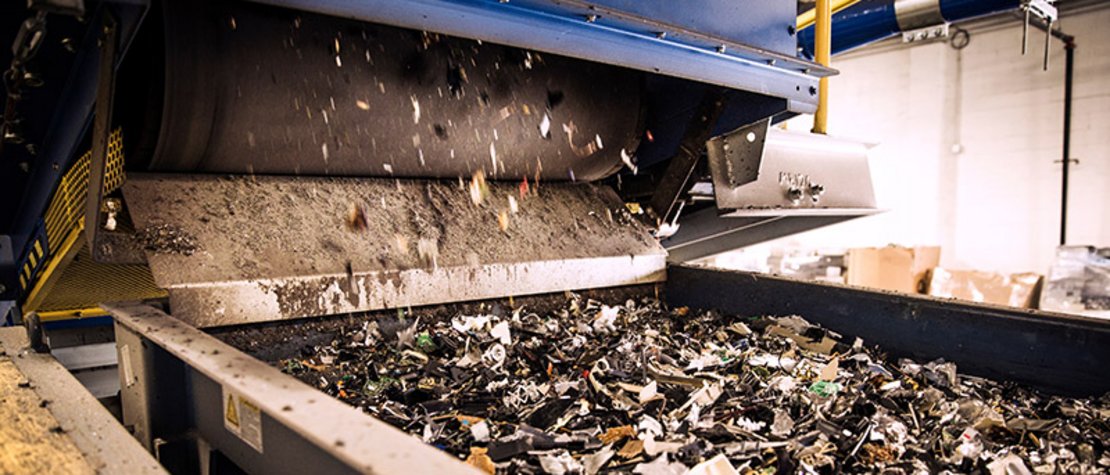
Recycling & Waste Management
Pneumatic and hydraulic systems are used in all areas of recycling and waste management, from waste collection to the thermal disposal of non-recyclable residues.
Waste compactors compress waste to save space during transport or temporary storage. They are used, for example, in garbage trucks to compact loose household waste and can be operated pneumatically or hydraulically, depending on requirements. Stationary scrap metal compactors are usually hydraulically operated and achieve a pressure of up to 20 MN. Cars and other large metal items can thus be easily compressed into stackable cubes.
Garbage trucks also use pneumatic and hydraulic components for loading and unloading. A front-loading system is often used to empty large-volume containers, such as those for glass. The containers are picked up by the front loader, hydraulically lifted over the cab, and emptied into the cargo area behind it. Upon arrival at the waste disposal site, the vehicle can be emptied using a hydraulic or pneumatic tipping mechanism, depending on its design, or the shipping container can be unloaded by crane.
Once the waste has arrived at its destination, the materials must be processed and sorted. The first step involves loosening and shredding the compressed waste. Shredders with hydraulic drives allow for smooth, consistent grinding action, easy reversal of the direction of movement, and starting from a standstill at full load. Pneumatic vibrators are suitable for use in conveyor troughs and for compacting, loosening, and screening the shredded material.
The loose material can then be transported further using pneumatic conveying systems. Pneumatic suction systems allow the waste to be sorted by density in the same step, separating, for example, lightweight plastic from heavy metal.
Fully automated waste sorting plants separate unsorted household waste into recyclable materials and non-recyclable residual waste. Such complex machines utilize a multitude of pneumatic and hydraulic systems, as well as sophisticated measuring and control units. Fully automated systems offer the crucial advantage of achieving a higher degree of purity in material separation than would be possible manually, while simultaneously significantly reducing the risk to human health from pathogens or hazardous substances.
Residual materials that cannot be further processed are either landfilled or incinerated. Modern waste incineration plants employ a wide range of hydraulic and pneumatic components, such as in fuel control and conveying systems, or in state-of-the-art filtration systems for the effective reduction of emissions.